
 Submit Form
 Create Meeting
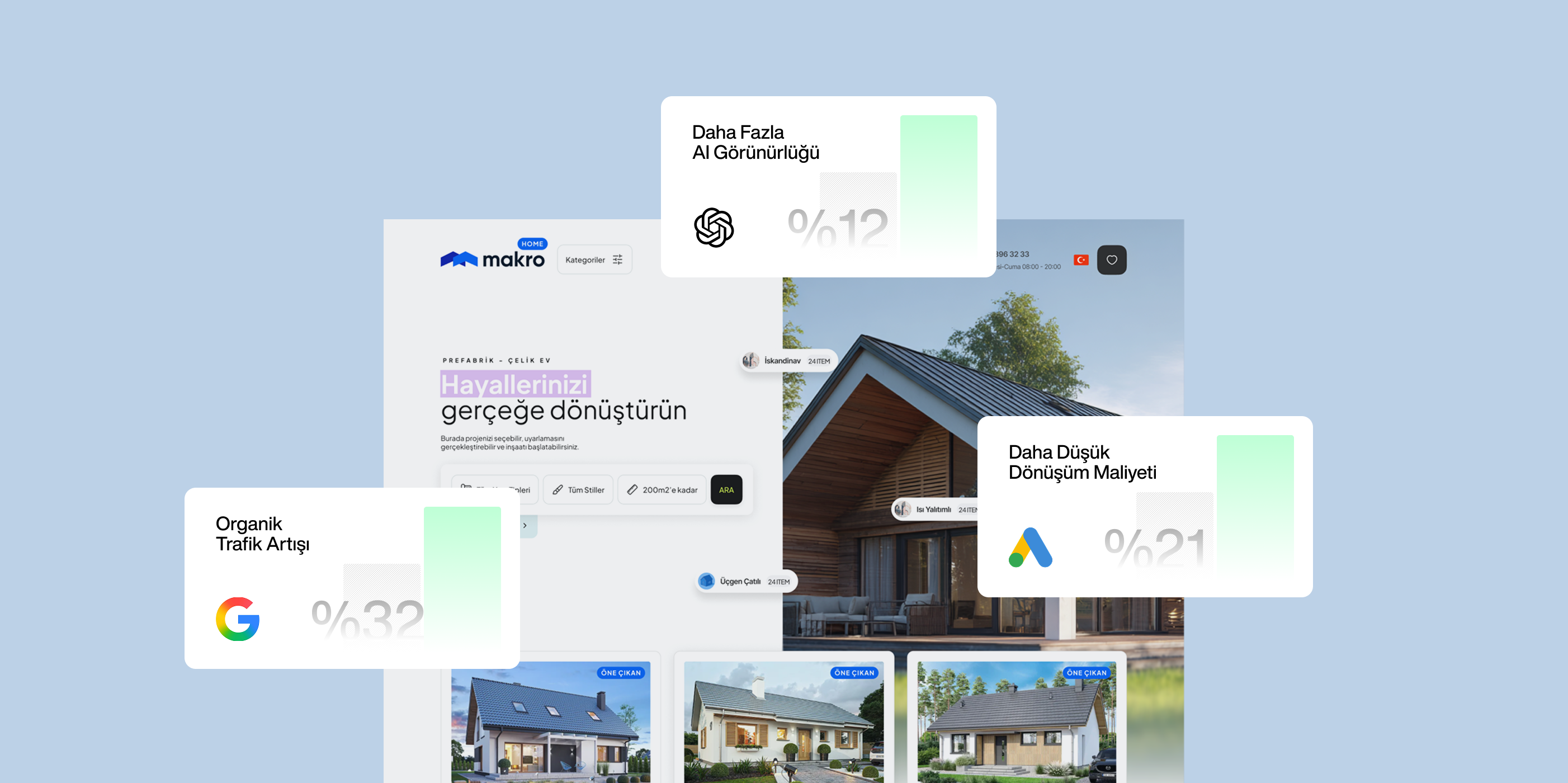
We prepared a website that directly targets the B2C target audience for Macro Prefabrik. We organized the entire experience for this audience and the selected markets. We set up Meta and Google Adwords accounts. We supported the process with SEO work. We enhanced the interface with creative pages and increased the time spent on the site.
Landing Page Production
We identified the differences in product purchase and signal generation experiences based on product type. We fed these differences with more aggressive landing pages and wizards that do not affect SEO performance.
Qualified Lead Tracking & Google Feedback
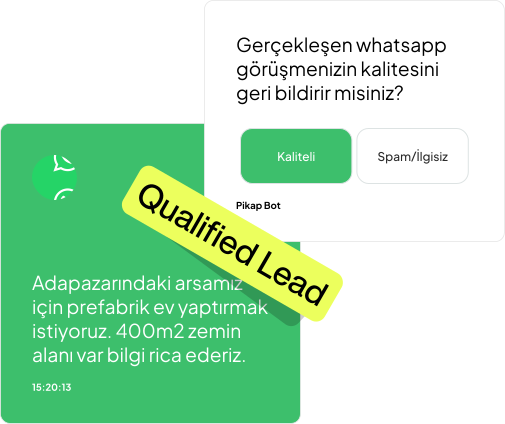
For all conversion types, we enabled real-time service tracking and feedback generation with more compact structures than a CRM, allowing our clients to track services and provide feedback without being tied to a CRM.
SEO Layer
Separate SEO clusters were created for each product segment. Building blocks supporting region-based search intents were added. Content focused on technical accuracy increased the brand's authority.
Frontend & System
A scalable product page architecture was developed. Images were optimized, loading speeds were improved, and the interface response time was reduced.
With a search intent driven campaign structure, we increased conversions by 50% in three months.

 Affordable Price
 Manufacturer
We fed the data we received from Whatsapp
through a webhook back into the Adwords API
to make the system dynamic.
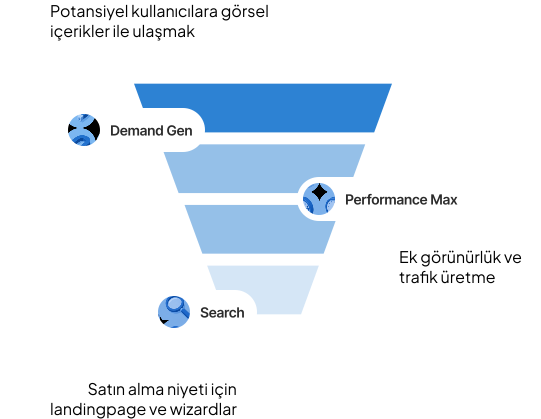
We targeted each campaign type to a different segment of the sales funnel. To keep the structure running, we supported the system with campaigns such as DSA and with budget optimisations.
We increased the time spent on the site. We deepened the experience with pages like comparison and wizard.
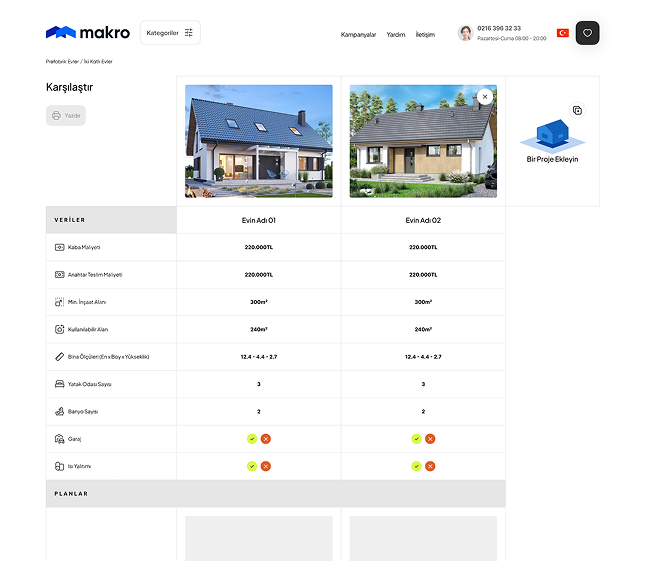
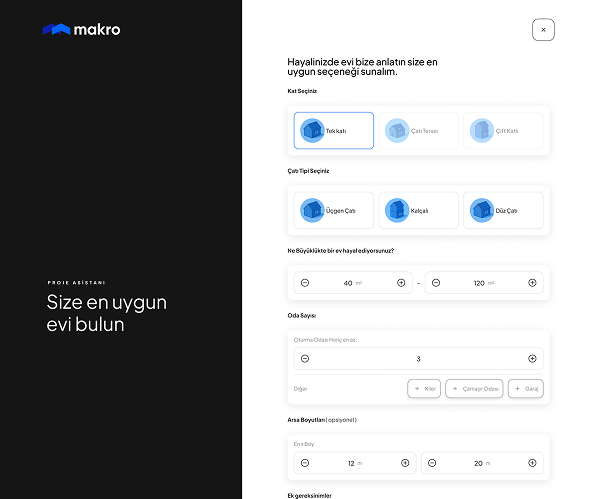
At Makro Steel, we restructured the digital experience by focusing on the end user's decision-making process. We developed comparison pages, advanced filters, and selection wizards to facilitate easier navigation between product segments, technical specifications, and usage scenarios. We also built the content strategy based on the same user behavior. We saw the results not only in increased visibility in SEO but also in key user metrics such as time spent on the site and bounce rate.
On the Google Ads side, instead of a uniform campaign approach, we created an integrated structure that works according to different stages of the sales funnel. With Demand Gen, we generated new demand; with Search campaigns, we captured active demand through strong CTA setups; with DSA, we expanded the search coverage; and with Performance Max, we supported conversions. We tailored landing pages based on search intent to meet the ad traffic. While maintaining the organic content architecture, we used more aggressive and conversion-focused pages for ad traffic.
We also took the measurement model beyond just form submissions. We included phone calls and WhatsApp interactions into the conversion process. Until the CRM developed for Makro is completed, we collected the quality of incoming leads in real-time from the client using a webhook-based temporary infrastructure. We matched this data with GCLID and fed it back to Google. Thus, we built a system that can optimize not only based on the number of conversions but also on the actual lead quality.
Ultimately, design, content, advertising, and measurement are no longer independent parts. We turned the signals left by the user from initial contact to qualified lead into part of the same strategy.